
Designer in Residence · Program Design · Curriculum Design · Facilitation · Strategy
Designing how a global company builds and applies innovation.
How might we help teams at Google build and use innovation practices, especially when things are unclear and moving fast?
participants across 7 countries
2,000+
of a 3,000-person organization participated in the Google-wide Doctors Without Borders initiative
48%
of leadership summit attendees said they learned something that would make them a better leader
77%
committed to leading differently after the “In the Pocket” summit
70%
The challenge
❋
Google had no shortage of intelligence. The gap was how that intelligence came together. Teams met across time zones, but collaboration often stopped at coordination. Surveys and feature requests created the feeling of insight, but missed what users actually needed.
The approach
✹
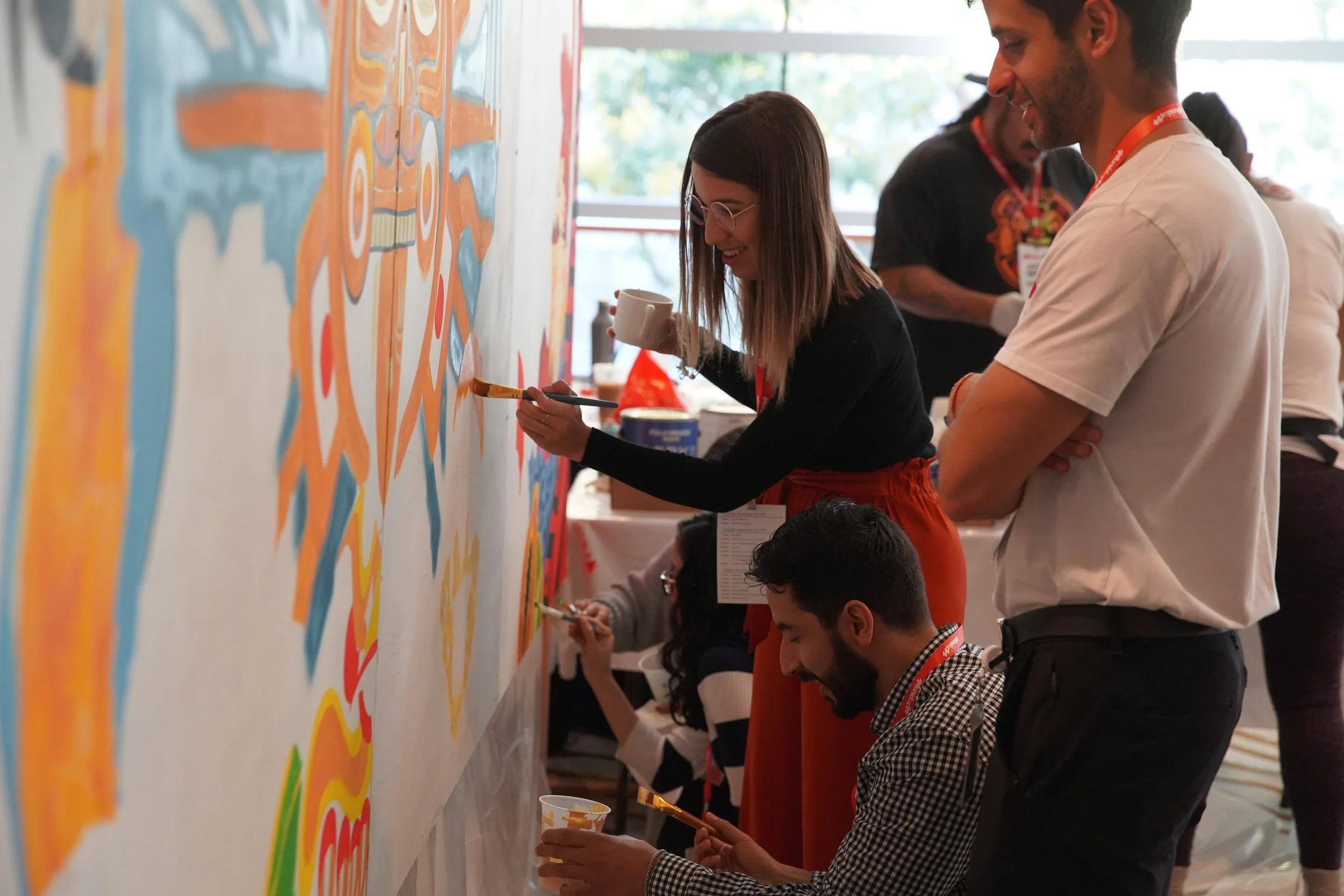
The approach centered on practice. Elysa designed programs that brought teams into direct contact with real problems, real users, and each other. This included immersive experiences, leadership programs, and hands-on research that replaced assumptions with lived understanding. Everything was built to be used immediately inside ongoing work.
What I owned
✱
Multi-week innovation programs tied to active projects
Leadership experiences focused on navigating ambiguity
Original curricula used across teams and regions
Immersions in Detroit, Hollywood, and Japan
Startups to Scaleups, scaled through a train-the-trainer model
A Google-wide initiative with Doctors Without Borders engaging 48% of a 3,000-person organization
The impact
❉
The work expanded from a 300-person division to a 3,000-person organization. Programs reached 2,000+ participants across 7 countries. Leadership experiences led to 77% of participants reporting they learned something they would apply and 70% committing to lead differently. The role itself became a permanent, growing function.
The trade-offs
✹
Scaling this work meant proving its value inside a culture that prioritized measurable output. Programs had to deliver results while holding space for uncertainty and experimentation. Global scale required constant adaptation across regions. Adoption came through use, not mandate, which meant building trust while continuing to show impact.
The takeaway
❉
Most organizations don’t need new ideas. They need better ways to think together. This work focused on building that practice at scale, inside a system that wouldn’t take it on faith.