IDEO · CREATIVE DIRECTOR & CONTENT DIRECTOR · DESIGN THINKING FOR EDUCATORS
2 people. 80,000 educators. Still on classroom walls 15 years later.
How might we design a toolkit that actually works inside the reality of a teacher's day, not the idealized version of one?
80,000+
educators reached
2
people on the core team
languages (educators around the world translated it themselves)
8
MOOC participants through Edutopia
3,000+
The situation
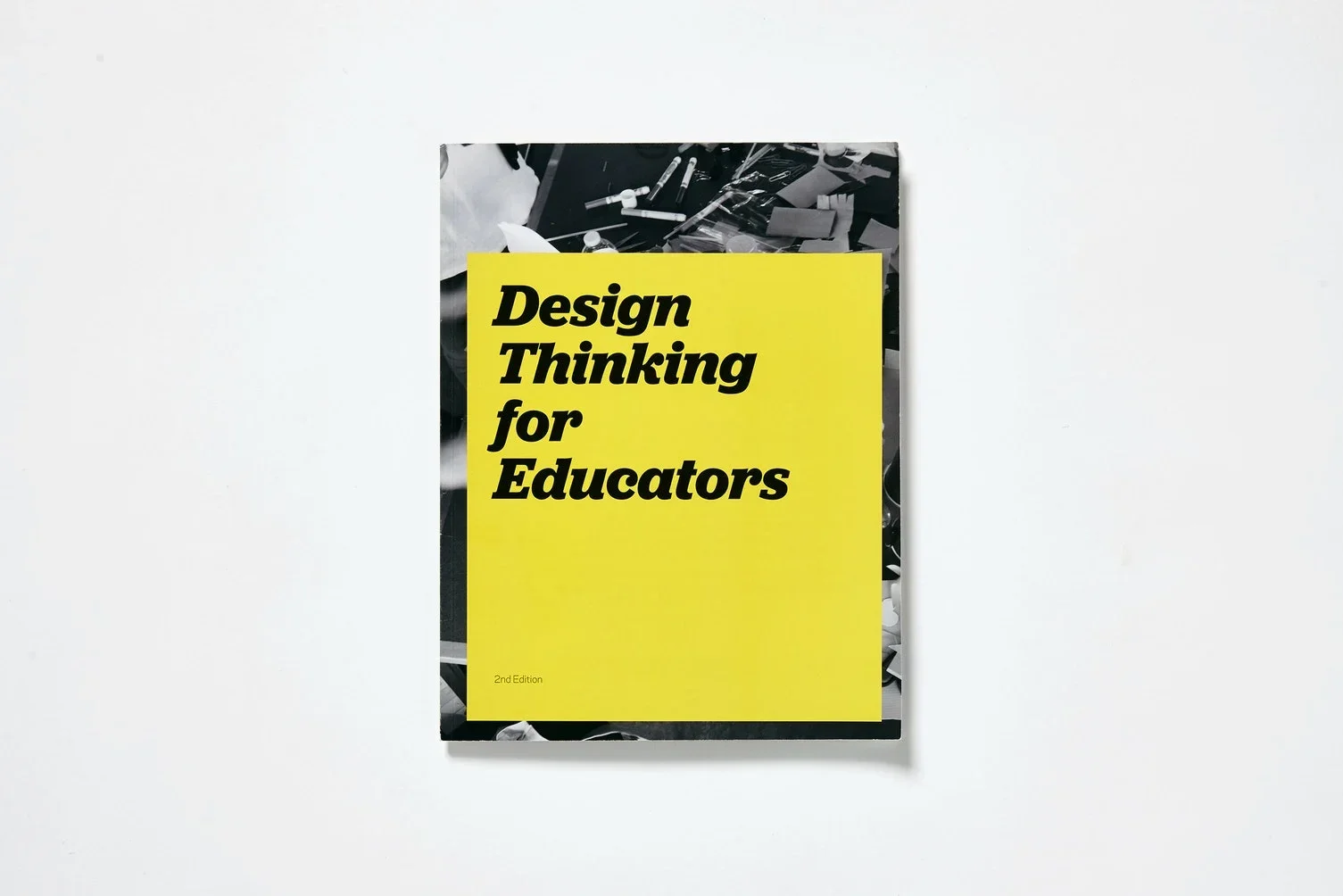
The first version of the Design Thinking for Educators toolkit already existed. Teachers were using it. And they kept telling us the same thing: it was too much.
Too dense. Too long. Too far from the actual texture of their days. It had real value, and it wasn't landing. The work was to figure out why, then redesign from the inside out.
Design thinking in education was still a concept more than a practice. Teachers had no shared picture of what it actually looked like in a real classroom, with real kids, on a real Tuesday. Without that, no framework was going to take root.
✹
What I owned
I was design project lead on the full system. The platform, the content architecture, the workbooks, the design challenges, the teacher story collection, the communications with educators around the world, and the video suite, where I served as Creative Director and Content Director.
The videos were one tool in a much bigger kit. So were the workbooks. So were the design challenges. What I owned was figuring out how all of it fit together, what teachers needed to encounter first, and how to keep someone engaged whether they had 5 minutes or a full professional development day.
I tracked down real teacher stories from around the world, shaped them into shareable formats, and built the partnerships with Riverdale Country School and Edutopia that grew into a full MOOC and large-scale educator workshops.
The core team was 2 people. What we built and the scale we reached says more about the power of the right collaboration than about volume of resources.
✱
The constraints
Teachers are one of the most time-scarce groups there is. Any tool for them has to earn its place in minutes. The first version hadn't passed that test. Every new entry point, from a quick design challenge to a full workbook to a 3-minute video, had to.
The toolkit also had to work across different contexts: different countries, different resource levels, different relationships to creative risk.
We had a small team, a small budget, and a very public project. This was one of the first projects I got to lead. The stakes were personal as well as professional.
The toolkit was open sourced. That decision shaped how I thought about reach and what the platform had to be.
✥
The trade-offs
The central tension was between rigor and reach. The academic and education audience needed depth: real curriculum, real frameworks, real intellectual substance. The same audience was already overwhelmed. Too much depth and we'd repeat the mistake of the first version.
Every decision about what to include was also a decision about what to cut. Keeping enough to be credible to an educator or researcher while moving fast enough to keep a tired teacher engaged. Those two things pull against each other constantly, and there's no formula for where to draw the line. You make a call and see what happens.
The speed constraint was real too. A small team, a public deadline, and a project that a lot of people were watching. I had to move fast and make the synthesis decisions quickly, without the luxury of extended iteration.
❉
The calls I made
The hardest decisions were about synthesis. What stays, what goes, what gets reframed for a teacher who has 5 minutes versus one who has a full professional development day. I designed multiple points of entry specifically because a single pathway was what had made the first version feel overwhelming.
The teacher stories weren't decoration. Teachers could engage with design thinking as an idea, but they couldn't really picture it until they could see it: what a real teacher's classroom actually looked like when they tried it, what surprised them, what their students did with it. I invested significant time finding and shaping those stories because they were the difference between a toolkit people downloaded and one they actually used.
For the videos, I chose voices that were honest about the learning curve. Not polished success stories. Real practitioners, talking about what was hard and what happened anyway. That was a deliberate creative choice, and it's what made the content feel trustworthy.
✱
What changed
80,000+ educators reached. 8 languages, none of them planned. Educators from around the world wanted the toolkit badly enough that they reached out to IDEO and offered to translate it themselves, on their own time, so they could share it with their communities. That's what demand looks like.
The Edutopia MOOC brought in 3,000+ participants. The large-scale educator workshops ran with several hundred attendees at a time.
Nearly 15 years later, I walked into my child's kindergarten and found maker space and design thinking methodology on the walls. That's rare. Most design work doesn't last a season. This shaped how an entire generation of teachers thinks about learning.
❊
What this unlocked
The most important design decisions on this project weren't visual. They were about access: who gets in, what they need to understand first, what's standing between a good idea and the person who could use it.
The 2-person team is worth noting not as a constraint we overcame but as proof of what the right collaboration makes possible. Nimble, clear-eyed, no wasted motion. That kind of output-to-headcount ratio is exactly what organizations are looking for now.