
STANFORD D.SCHOOL · LECTURER · CURRICULUM DESIGN · EXPERIENCE DESIGN · PARTNERSHIPS
Building curriculum at the edge of what’s known.

How might we explore the role of design in building out the psychedelic ecosystem?
15+
years on faculty
original courses conceived, developed, and/or taught
3 courses
students in Design for Play alone
600+
from all 7 Stanford schools in Psychedelic Medicine x Design
41 students
pop-up prototype courses developed over the years
5+
The challenge
❋
Most curriculum is built around established knowledge. This work lived at the edges of what’s known.
Each course required making the case for why it belonged, then building structure for topics that didn’t have clear frameworks. Students weren’t there to absorb answers. They needed to learn how to think inside uncertainty.
The approach
✹
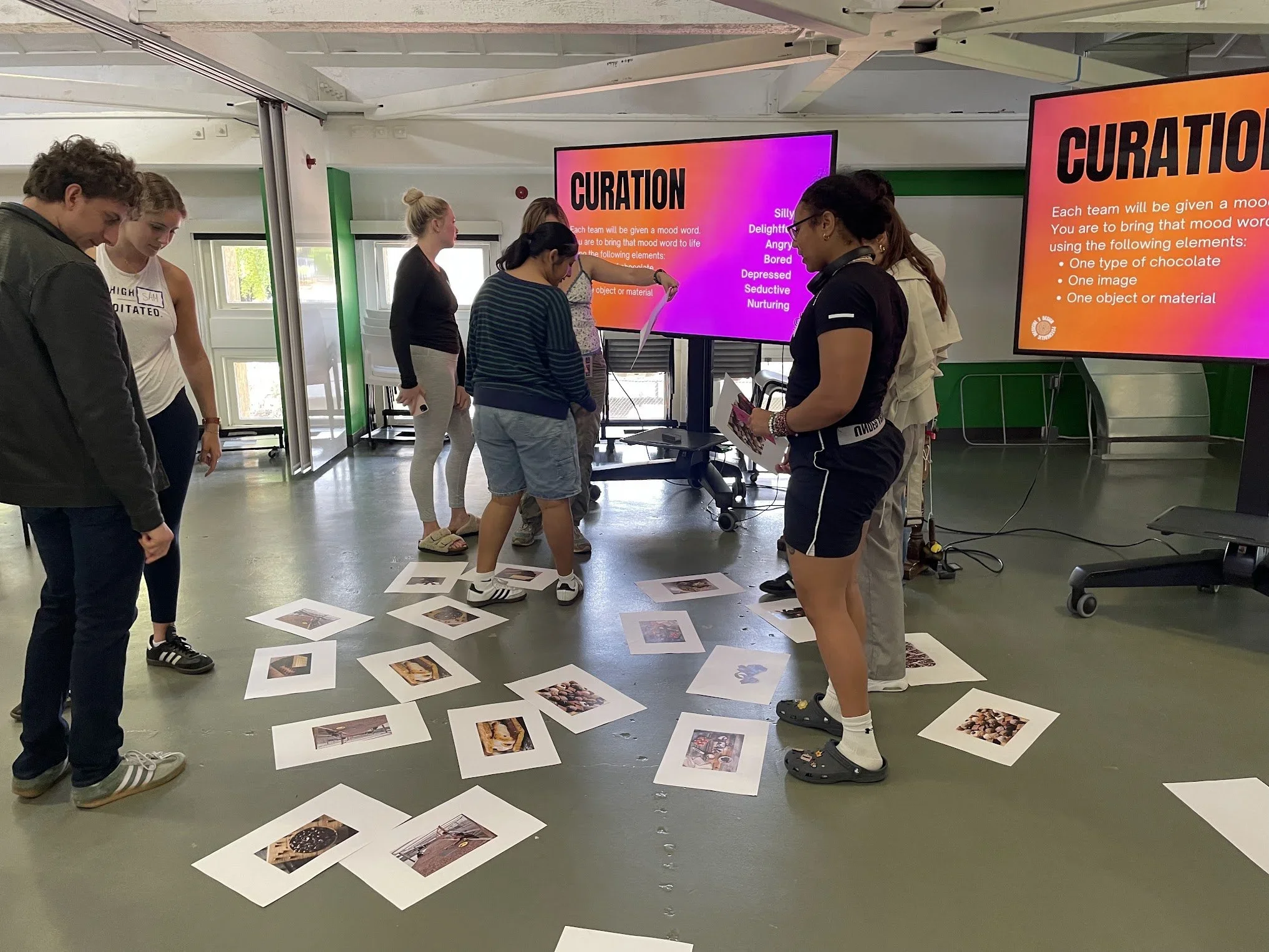
I designed courses that combined rigorous thinking with real-world application.
That meant building curriculum from scratch, curating outside voices, and structuring experiences that could hold complexity without flattening it. The work was iterative, shaped by what landed in the room and refined over time.
What I built
✱
3 original courses conceived, developed, and taught
5+ pop-up prototype courses to test new ideas
Long-term partnerships across industries including clinicians, policymakers, and researchers
Learning experiences grounded in real-world challenges
The impact
✥
15+ years on faculty
600+ students in Design for Play
41 students across all 7 Stanford schools in Psychedelic Medicine x Design
Courses adopted into the d.school curriculum, including a permanent course number for Psychedelic Medicine x Design
Course highlights
❉
Design for Play
Built around the science of play and its impact on how people think and collaborate. Students worked on real behavioral challenges, using play as a tool to unlock new ways of engaging with complex problems.
Forbidden Design
Focused on designing for systems that don’t yet exist. Students explored topics like emerging industries, cultural institutions, and future-facing challenges where there are no clear precedents.
Psycheldelic Medicine x Design
Stanford’s first course at the intersection of psychedelic medicine and design. I built the curriculum from scratch, curated 27 voices across the ecosystem, and designed a learning experience that could hold clinical, cultural, and ethical complexity.
The tradeoffs
❊
Building in emerging fields meant working without established frameworks. The challenge was creating enough structure for rigor while leaving space for exploration.
Each course had to balance depth with accessibility, and academic expectations with real-world application.
Guest Speakers
Dr. Giancarlo Glick
Psychiatrist, Stanford
Dr. J. Christian Greer
Harvard Divinity School / Stanford Lecturer
Ayize Jama-Everett
Starr King School for the Ministry
Patricia James
Medicine Woman
William Brewer
Author, Stanford Lecturer
Bennett Zelner
Economist, University of Maryland
Ismail Ali, JD
Director of Policy & Advocacy, MAPS
Liana Gillooly
Strategic Initiatives Officer, MAPS
Peter Vitale
Shulgin Farm
Dr. Joseph Barsuglia
Psychologist, Psychedelic Journeys
Tricia Eastman
Psychedelic Journeys
Dr. David Yaden
Johns Hopkins University, Center for Psychedelic and Consciousness Research
Krisna Trevor-Oswalt (East Forest)
Musician, Psychedelic Composer
Reggie Harris
Oakland Hyphae
George Kembel
Founding Executive Director, Stanford d.school
Bernie Roth
Professor Emeritus, Stanford University
Wendy Tucker
Shulgin Farm
Dr. BJ Miller
Palliative Medicine Physician, Founder of Mettle Health
Ladybird Morgan
Palliative Care Consultant, Mettle Health
Mariavittoria Mangini, PhD, FNP
Brian Muraresku
Author, The Immortality Key
Joe Moore
CEO, Psychedelics Today
Dr. Boris Heifets
Professor, Stanford University
Dayna West
Self-appointed Ambassador for the Renaissance of Psychedelic Medicine
Graham Pechenik
Founder, Calyx Law
Student Voices
“My interest was superficial. I saw psychedelics in the class description and was like, This sounds really cool, let's do it! ...it turned out to be so much deeper than I ever expected. When the speakers started talking about the emotional and physical preparation, and what’s required to go through a journey, I got a better grasp of what these compounds can actually do to help people.”
“It's been powerful seeing where my cohort and I can be held accountable when thinking of how experiences are delivered in the world. These compounds are part of systems just like the rest of healthcare. There are power dynamics and trust that needs to be considered.”
“I used to think there’s no way there’s ten weeks worth of information about psychedelics. Now I think it’s a huge, complex beautiful subject.”